Frequently Asked Questions Regarding the New Smoke Alarm Laws
We have gathered a number of frequently asked questions regarding the new smoke alarm legislation in Scotland and we have answered them below.
You will need
- A smoke alarm in your primary living space
- A smoke alarm in a circulation space, i.e hallway
- A heat alarm in your kitchen
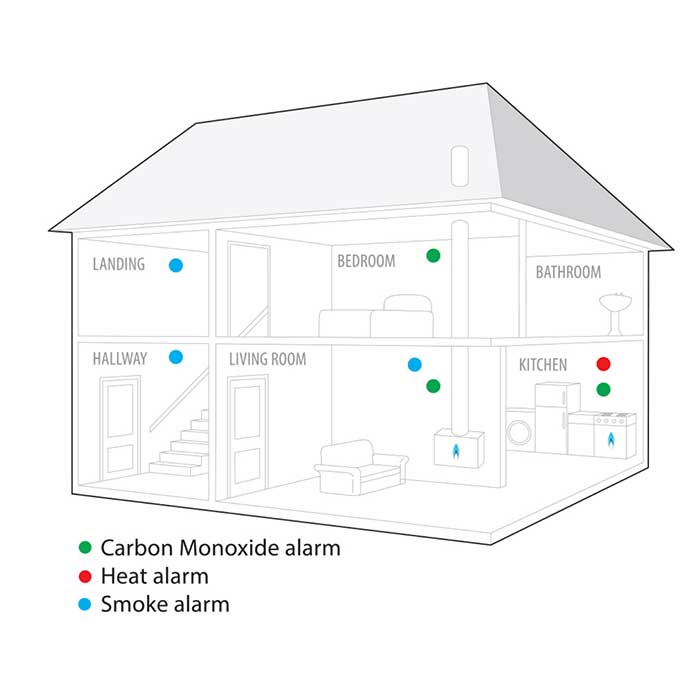
As of February 2022, you will need to have at least 3 smoke alarms in your home. Typically in your living room or lounge as it should be in the room that you spend the most time in and one in your hallway or landing. You will also need a heat alarm in your kitchen.
It is advisable to use the services of an expert who will be able to make sure that your alarms are properly set up, hard-wired, and interlinked.
Yes, your smoke alarm must be powered by the mains through fixed wiring unless you have an alarm that features a tamper-proof lifetime battery.
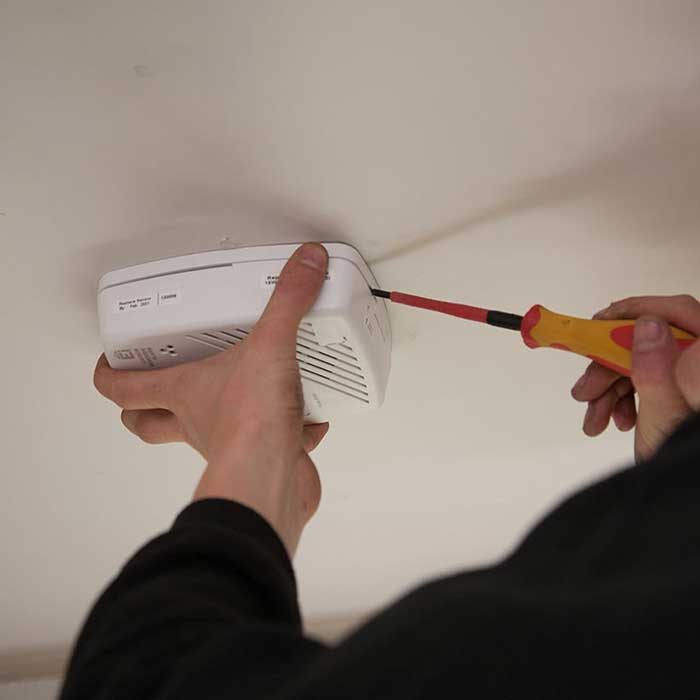
Yes, even mains smoke alarms will degrade over time. That is why we advise you to have your smoke alarm professionally reviewed and, if needed, replaced with an experienced team like AC Gold.
The deadline for the new smoke and heat alarm legislation is February 2022.
Yes, your smoke and heat alarms must be interlinked in line with the new legislation.
You will need hard-wired or lifetime battery smoke and heat alarms that can be interlinked with the other smoke and heat alarms on your property. If you are still unsure see the government guidelines on acceptable alarms.
Smoke alarms will detect a build-up of carbon monoxide (smoke) but in rooms where there is smoke or steam present, like kitchens and bathrooms, heat alarms are more appropriate. Heat alarms will go off when your room reaches a certain temperature.
Yes, they can be linked through radio frequency so long as they meet required standards, those being either hard wired or long-life tamper-proof lithium alarms.
No. Your alarm must be hard-wired or have a long-life tamper-proof battery.
The homeowner is responsible for the alarm installation.
To make sure that you are not falling out with government guidance, you should have your alarms seen to at least twice every year.
An engineer will review your smoke and heat alarms, ensuring that they are all in good working order and are properly interlinked.